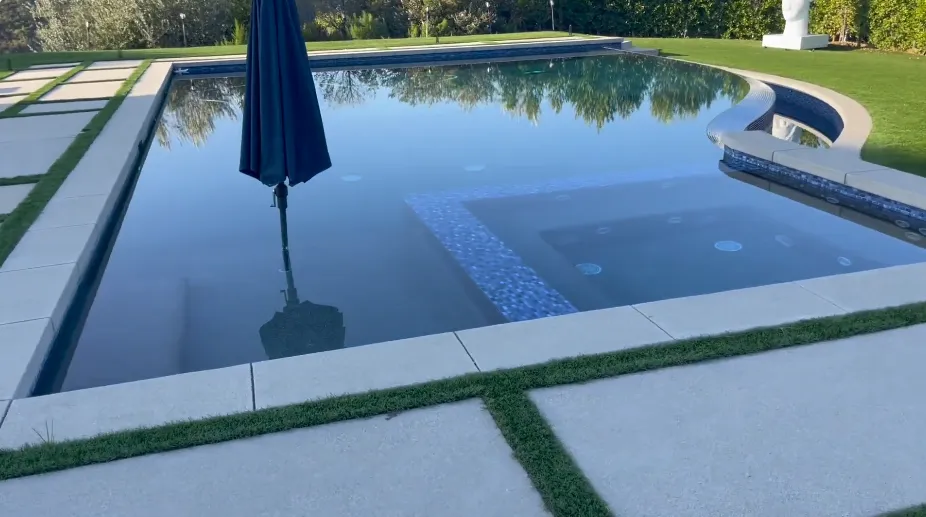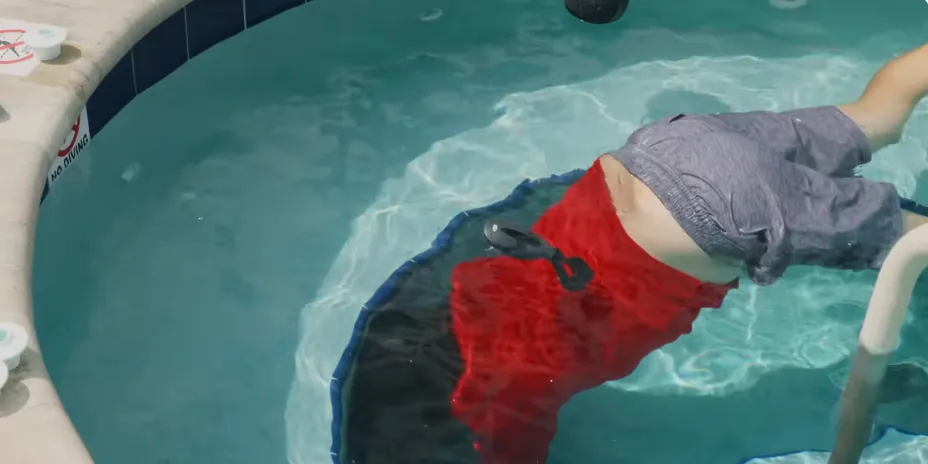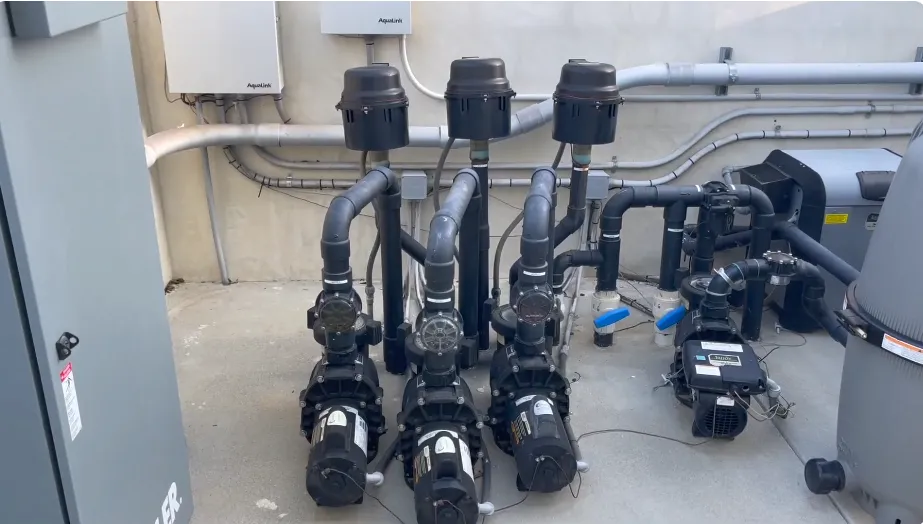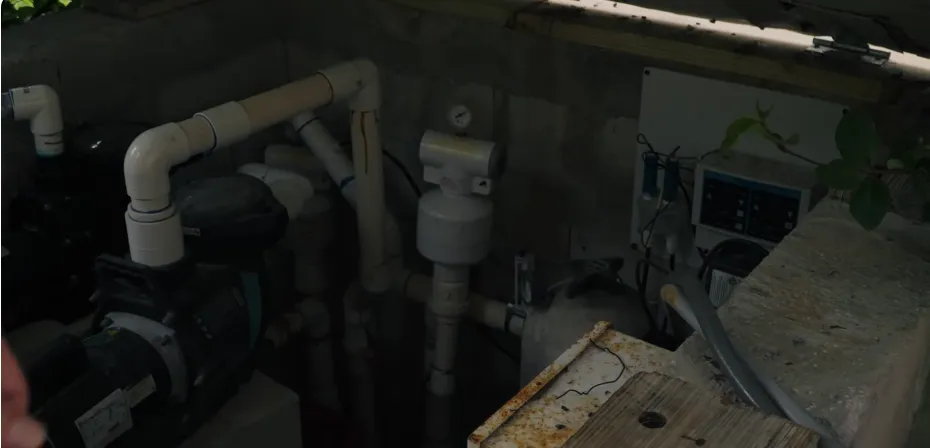
If your pool is losing water after a storm, first let the water level settle, since heavy rain often overfills the pool and it drains back to the skimmer level. Then run a bucket test. If the pool still loses more than evaporation, check for new deck cracks, a shifted skimmer, wet ground around the equipment, and debris damage, then have the lines pressure tested.
- Rain overfill drains back first: wait before judging the loss.
- Saturated soil can shift decks, skimmers and buried lines.
- Debris and surges can damage equipment and fittings.
- A bucket test separates real leaks from post-storm evaporation.
First, Let the Level Settle
Heavy rain often fills a pool above its normal line. As it drains back through the skimmer or overflow, the level drops quickly for a day or two. That drop is not a leak. Clear the debris, run the pump and filter normally, and wait until the water is back at its usual height before you start measuring.
How Storms Cause Pool Leaks
Saturated, shifting ground. Days of heavy rain soak the sandy soil around the pool. Ground movement can open a gap between the skimmer and the shell, crack the deck or coping, or stress buried lines.
Hydrostatic pressure. A high water table pushes up on the shell, which is one reason pools should not be drained before a storm.
Debris impact. Falling branches can crack tile, coping or the shell, and damage lights and fittings.
Equipment damage. Flooding and power surges can damage pumps, heaters and valves, which then leak at the equipment pad.
What to Check
- New cracks in the deck, coping or tile line
- A gap around the skimmer where it meets the shell
- Wet or soft ground near the equipment pad or along plumbing routes
- Air in the pump basket or bubbles from the returns
- Drips at the pump, filter, heater or valves
- Damaged or loose light fixtures
Run a Bucket Test
Once the level is stable, run a bucket test with the autofill off. It compares the pool's loss with a bucket of water in the same conditions, so you know whether the drop is more than evaporation. Use our bucket test guide and calculator. If you see a clear difference, the guide to pool dye testing can help you check cracks and fittings yourself.
When to Call
If the bucket test shows a leak, or you see structural cracks, have the pool professionally checked. A provider pressure tests each line, dye tests fittings and cracks, and listens underwater to find the source. Storm damage is also worth documenting with photos for insurance. See pool leak detection.
Frequently Asked Questions
Is it normal for my pool to drop after a storm?
Some drop is normal as rain overfill drains back. A continued loss once the level settles may be a leak.
Should I drain my pool after a hurricane?
No. Draining with a high water table can damage the shell. Clean and balance it instead.
Can a storm crack a pool?
Ground movement, hydrostatic pressure and debris can crack shells, decks and coping.
How soon should I test for a leak?
After the water level is back to normal and debris is cleared, run a bucket test with the autofill off.
How do I get a quote?
Call (813) 303-9621, share your bucket test result and any storm damage, and a local provider can give you a free quote.