On this page
- What Is a Slab Leak?
- How Do Professionals Find a Leak Under Concrete?
- What Are the Warning Signs of a Slab Leak?
- Why Do Slab Leaks Happen in Plant City Homes?
- What Can You Check Yourself Before Calling?
- What Happens During a Slab Leak Detection Visit?
- What Shapes a Slab Leak Search?
- When Is a Slab Leak an Emergency?
- FAQs
Think you have a slab leak?
Call now to be connected with an available local provider for slab leak detection.
(813) 303-9621Free call connection · Open 24/7 · Plant City, Brandon, Valrico, Seffner & DoverSlab leak detection finds a leaking water line under or inside a home's concrete foundation without breaking up the floor to search. A provider confirms the leak with a pressure test, traces the pipe through the slab, then uses acoustic microphones, thermal imaging and sometimes tracer gas to mark the break, often to within inches, so the repair needs only one small opening.
What Is a Slab Leak?
A slab leak is a leak in a pressurized water supply line that runs beneath or through a home's concrete foundation. In most Florida homes, copper or plastic lines are laid in the sand or gravel before the slab is poured, then branch up through the concrete to sinks, tubs and appliances. When one of those buried lines fails, the water escapes into the soil under your floor where you can't see it.
Slab leaks can happen on the cold side or the hot side. Hot-side leaks are especially common because heated water expands copper with every use, and the pipe rubs against concrete, rebar or gravel as it moves. Over years that abrasion and expansion wears through the pipe wall. A slab leak is different from a drain leak under the slab: supply lines are always under pressure, so they leak around the clock, while drain lines only leak when water is flowing down them.
Because most homes in Plant City are built slab-on-grade over sandy soil, slab leaks are one of the most common hidden plumbing problems in the area, from older homes around Walden Lake to newer subdivisions.
How Do Professionals Find a Leak Under Concrete?
Finding a slab leak is a process of narrowing the search, from the whole house down to a single spot. Each step rules out part of the plumbing system.
- Meter and pressure test. All water is shut off and the meter is watched. A gauge on a hose bib or the water heater shows whether the system holds pressure. Closing the cold inlet to the water heater tells the hot side from the cold side.
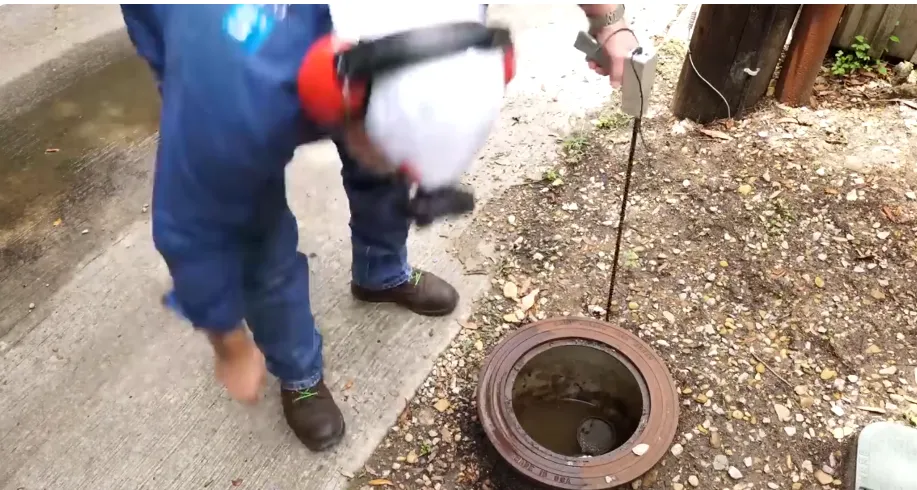
- Listening at the fixtures. An acoustic probe is pressed against angle stops, tub valves and hose bibs throughout the house. The leak sounds loudest at the valves closest to the break, which points to the area of the slab to focus on.
- Line tracing. An electronic line locator follows the pipe's path through the slab so the technician listens directly above the line rather than guessing.
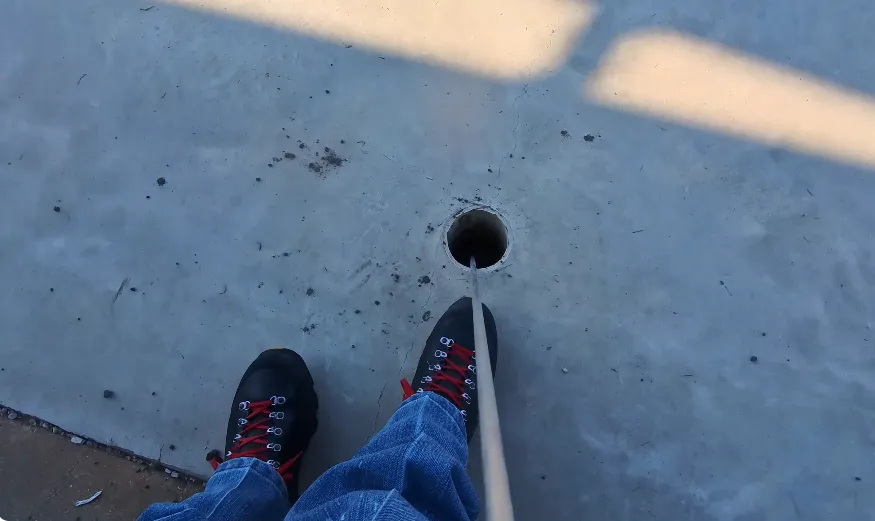
- Ground microphones. A sensitive microphone on the floor picks up the hiss of water escaping under pressure. Readings are compared every few inches along the line until the signal peaks.
- Thermal imaging. On hot-side leaks, an infrared camera shows a warm bloom in the floor where heated water is spreading under the tile.
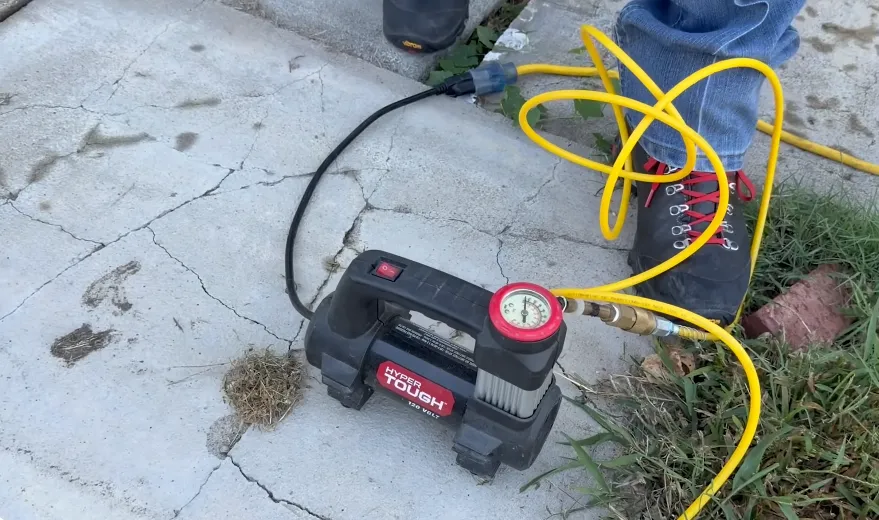
- Air or tracer gas. When a leak is quiet or the pipe is plastic, compressed air or a safe tracer gas is introduced. Air creates a bubbling sound that's easier to hear; tracer gas rises through the concrete and is picked up by a detector.
The result is a mark on the floor. That mark is what lets a plumber open a small section instead of cutting several exploratory holes. Learn more about how these tools work together on our leak detection Plant City FL overview.
What Are the Warning Signs of a Slab Leak?
Slab leaks rarely announce themselves with standing water. These are the signs to watch for:
- A warm or hot spot on the floor, often in a hallway, kitchen or bathroom, when no one has used hot water.
- The sound of running water under the floor or inside walls when every fixture is off.
- The meter's leak indicator moving with all water shut off inside and out.
- A water heater that runs constantly or seems to run out of hot water sooner than it used to.
- Damp or swollen baseboards, carpet that feels wet at the edges, or wood flooring that cups or lifts.
- New cracks in tile, grout or stained concrete that grow over weeks.
- A musty smell or mold near the floor, especially after the house has been closed up.
- Lower water pressure at several fixtures, or a sudden jump in water usage with no change in habits.
One sign on its own can have other explanations. Two or more together, especially a warm floor plus a moving meter, point strongly to a slab leak.
Why Do Slab Leaks Happen in Plant City Homes?
Soil movement. Plant City sits on sandy soil that gets saturated during the summer rainy season and dries out in the cooler months. That cycle shifts the ground under the slab, and the pipes buried in it flex with every move until a joint or thin spot gives way.
Abrasion and expansion. Copper lines installed tight against rebar, gravel or the concrete itself wear through over time as they expand and contract. Hot lines move the most, which is why so many slab leaks are on the hot side.
Water chemistry. Groundwater in this part of Florida comes largely from the Floridan aquifer and carries a lot of dissolved minerals. Scale and water chemistry can contribute to pinhole corrosion inside copper pipe.
Age and installation. Homes built a few decades ago are now reaching the age where original copper starts to fail. In newer homes, a kinked line, a damaged fitting or a pipe nicked during construction can fail early.
High water pressure. Pressure above what fixtures need adds stress to every joint in the system. A pressure-reducing valve that has failed can make leaks more likely.
What Can You Check Yourself Before Calling?
A few safe checks help confirm a slab leak and make the provider's visit faster:
- Meter test. Turn off every faucet, appliance and irrigation zone. Watch the meter's leak indicator for a couple of minutes. If it moves, water is escaping.
- House valve test. Close the main shut-off at the house. If the meter stops, the leak is inside the home or under the slab. If it keeps moving, look at the underground water line or irrigation instead.
- Hot vs. cold test. Open the house valve again and close only the cold inlet valve on top of the water heater. If the meter stops, the leak is likely on the hot side.
- Barefoot walk. Walk slowly across tile floors and note any spot that feels warmer than the rest.
- Quiet listen. Late at night, listen near floors and the base of walls for a faint hiss or rush.
Pro tip: Write down your meter reading, avoid using water for an hour, and read it again. The difference tells the provider how fast water is escaping, which helps them plan the test.
What Happens During a Slab Leak Detection Visit?
Every provider has its own routine, but a typical visit follows this order:
- Walkthrough. The technician asks what you've noticed, looks at the meter, the water heater and any visible damage.
- Confirm and isolate. Pressure tests confirm the leak and separate hot from cold, inside from outside.
- Trace the lines. The likely line is located and its route through the slab is marked.
- Pinpoint. Acoustic, thermal and, if needed, tracer gas methods narrow the leak to a single point, which is marked on the floor.
- Explain the findings. You'll hear which line is leaking, roughly how much water is being lost, and what repair options make sense, such as a spot repair through the floor or rerouting the line through walls or the attic.
- Documentation. Many providers give written findings with photos, which help your plumber and any insurance claim.
Furniture and rugs over the suspected area may need to be moved, so clearing the space ahead of time helps.
What Shapes a Slab Leak Search?
No two slab leaks are the same. These factors decide which tools are used and how long the search takes:
| Factor | Why it matters |
|---|---|
| Hot or cold line | Hot-side leaks can be seen with thermal imaging; cold-side leaks rely more on sound and tracer gas. |
| Pipe material | Copper carries sound well. PEX and CPVC are quieter and may need air injection or tracer gas. |
| Floor covering | Tile and bare concrete transmit sound and heat well; thick carpet and padding can muffle readings. |
| Leak size | Fast leaks are louder and easier to hear; slow pinholes may need extra isolation steps. |
| Home layout | Long runs and many branch lines mean more line tracing before pinpointing. |
To get a free quote for your situation, call (813) 303-9621 and describe what you're seeing.
When Is a Slab Leak an Emergency?
Treat it as urgent if water is coming up through the floor, the floor is hot over a wide area, the meter is spinning fast, or water is reaching electrical outlets or appliances. Shut off the main valve, turn off the water heater, and call for 24/7 emergency leak detection. A slow leak with a barely moving meter can wait for a scheduled visit, but not for long: water under a slab keeps soaking the soil and spreading under flooring every hour it runs.
Warning: Don't start breaking tile or concrete to look for a leak yourself. Without pinpointing, it's easy to open the wrong spot, damage other lines in the slab, or hit electrical conduit.
Slab Leak Detection FAQs
How do I know if I have a slab leak or a regular pipe leak?
A regular pipe leak usually shows itself under a sink or behind a fixture. A slab leak shows up as a moving meter with everything off, a warm spot on the floor, or the sound of water under tile, with no visible source. A pressure test confirms which one it is.
Can a slab leak be found without breaking the floor?
Yes. Detection is non-invasive: pressure tests, line tracing, ground microphones, thermal cameras and tracer gas all work from the surface. Only the repair needs an opening, and pinpointing keeps it to one small section.
Can a slab leak fix itself?
No. A pressurized line keeps leaking, and the hole tends to get bigger as water erodes the pipe and the soil around it. Waiting usually means more damage to flooring and more saturated soil under the slab.
Does every slab leak mean I need to replace my pipes?
Not always. A single leak on otherwise healthy pipe can often be spot-repaired. If the pipe shows several weak points or leaks keep returning, rerouting the line through walls or the attic may make more sense. The provider's findings help you decide.
Can a slab leak cause mold?
Yes. Moisture wicking up through the slab can wet baseboards, carpet pad and drywall, and in Florida humidity mold can begin within a day or two. Musty odors near the floor are a common clue.
How do I get a quote for slab leak detection?
Call (813) 303-9621. You'll be connected with an independent local provider who can talk through your symptoms and give you a free quote before scheduling.