On this page
Burst pipe or tiny pinhole?
Shut off the main if water is spraying, then call to be connected with a provider.
(813) 303-9621Free call connection · Open 24/7 · Plant City, Brandon, Valrico, Seffner & DoverPinhole and burst pipe leak detection finds small corrosion holes and splits in water supply pipes, most often copper, inside walls, ceilings and under slabs. Providers confirm the leak with a pressure test, then use acoustic listening, thermal imaging and moisture readings to pinpoint it. Because pinholes often come in clusters, they also assess whether the same line is likely to leak again.
What Is a Pinhole Leak?
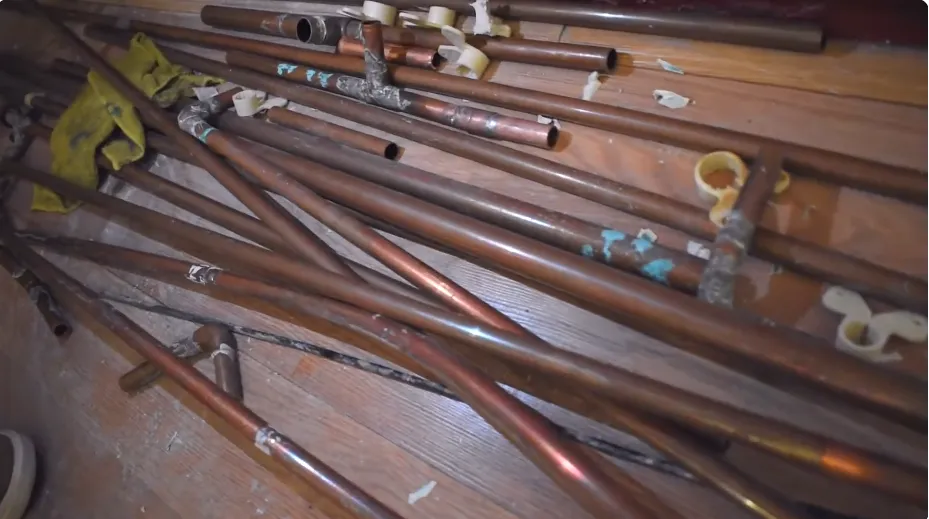
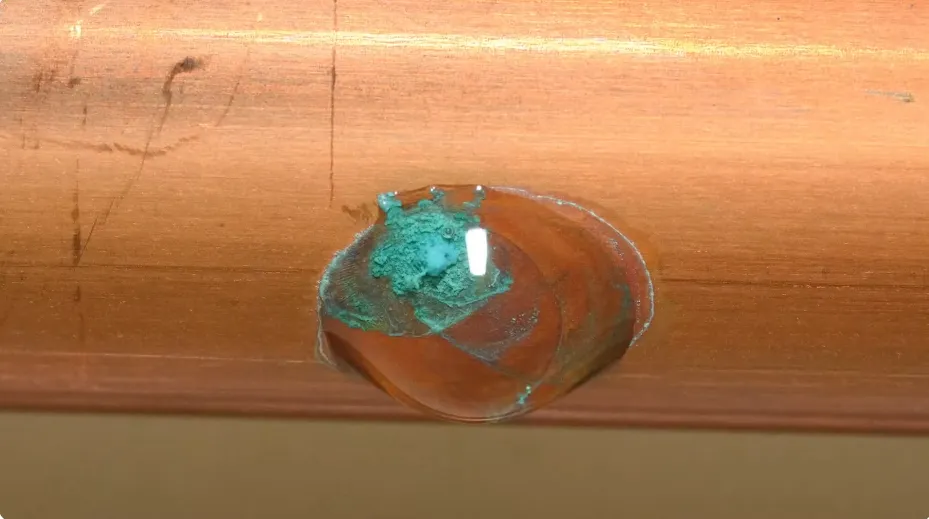
A pinhole leak is a tiny hole, often smaller than a pencil tip, that forms in the wall of a water pipe. In copper, it usually starts as corrosion on the inside of the pipe that eats through slowly until water breaks out. From the outside you may see a small green or blue crust, or nothing at all until the wall around it is wet.
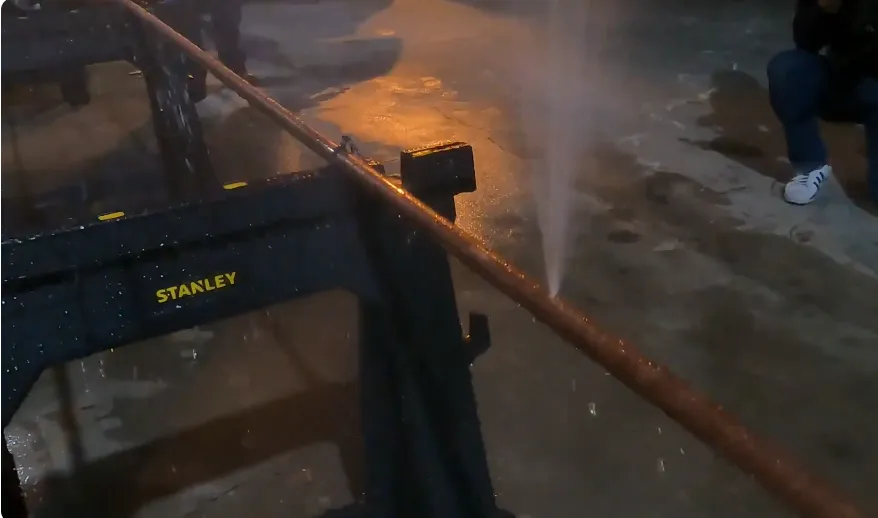
Because the hole is so small and the line is under pressure, a pinhole sprays a fine mist rather than a stream. Inside a wall that mist soaks insulation and drywall; under a slab it saturates the soil. Pinholes rarely fix themselves. The flow erodes the edge of the hole and it slowly gets bigger.
A burst pipe is the opposite: a sudden split or a fitting that blows apart, releasing a lot of water fast. Bursts are often the end result of a pipe that was already thin from the same corrosion that causes pinholes.
What Causes Pinhole Leaks in Copper?
Water chemistry. The pH, minerals and disinfectants in water affect how copper corrodes. Groundwater in this part of Florida comes largely from the Floridan aquifer and is mineral-rich, and treatment methods vary by utility. Some combinations favor pitting corrosion inside copper pipe.
Water velocity and turbulence. Fast-moving water, especially in hot lines and just past elbows and tees, wears the inside of the pipe.
Sediment and debris. Particles carried in the water can scour the pipe wall.
Installation factors. Excess flux left inside joints, burrs at cut ends, and pipe that's in contact with dissimilar metals can start corrosion.
Electrical grounding. Stray current on a home's plumbing has been linked to pipe corrosion in some cases, so grounding is sometimes reviewed when pinholes keep returning.
Age. Copper installed decades ago, common in established Plant City neighborhoods such as Walden Lake, has had more time for pitting to work through.
What Are the Signs of a Pinhole or Burst Pipe?
- A hissing or spraying sound inside a wall or ceiling
- A small damp spot on drywall that slowly grows
- Water stains or bubbling paint on ceilings below bathrooms
- Green or blue crust on exposed copper pipe
- The meter's leak indicator moving with all water off
- A warm spot on the floor (hot-line pinhole under the slab)
- A sudden drop in water pressure (often a burst)
- Water spraying or pouring from a wall, ceiling or cabinet (burst)
How Are Pinholes Found Inside Walls and Under Slabs?
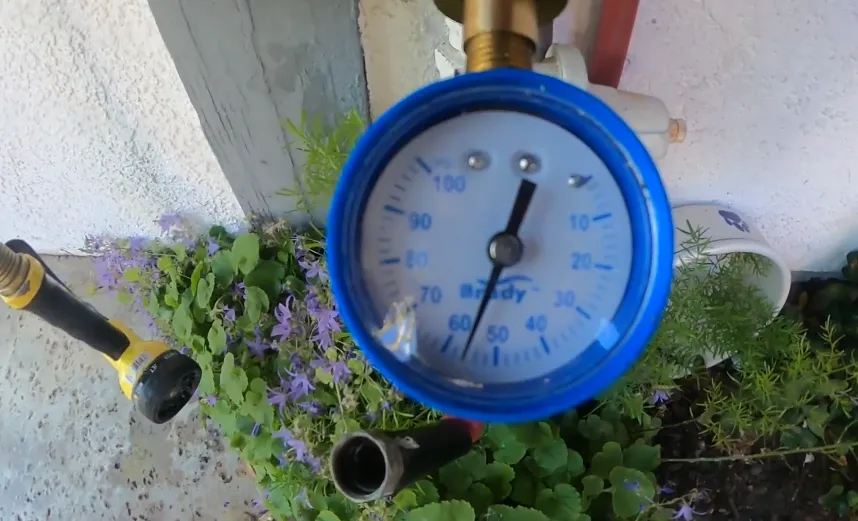
- Confirm with a pressure test and meter check, and separate hot from cold.
- Listen at valves and fixtures. A pinhole under pressure makes a high-pitched hiss that acoustic equipment can pick up through the pipe.
- Thermal imaging shows a cool damp patch on drywall, or a warm bloom over a hot-line pinhole under tile.
- Moisture mapping finds the center of a wet area inside a wall.
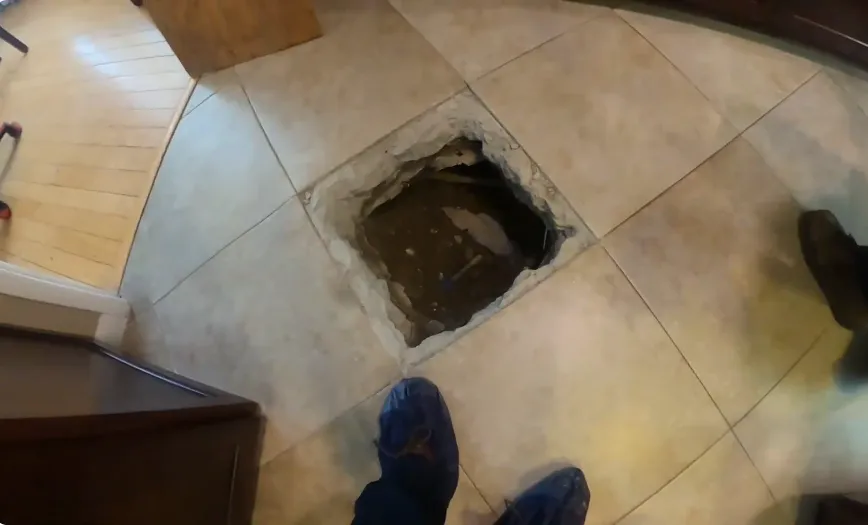
- Line tracing follows the pipe's route through the slab or wall so listening happens right over the line.
Finding the hole is only half the job with pinholes. The provider also looks at where the pipe is corroding and how many leaks the home has had, which helps you decide the next step. Learn about other hidden leaks inside walls on their dedicated page.
One Pinhole or Many? Repair vs. Repipe
When one pinhole appears in copper, others along the same run are often close behind, because the conditions that caused the first one affect the whole line. That's why the decision after detection matters:
| Situation | Common approach |
|---|---|
| A single pinhole, pipe otherwise in good shape | Spot repair of that section |
| Repeated pinholes on the same line | Replace or reroute that line through walls or attic |
| Pinholes on several lines, or a slab line that keeps leaking | Consider a partial or whole-home repipe |
| Burst at a fitting with sound pipe around it | Replace the fitting and inspect nearby joints |
Our guide to leak repair and repipe options explains these choices in more detail.
What Should You Do Right Now?
- Shut off the main water valve if water is spraying or pouring.
- Turn off the water heater if the leak may be on the hot side.
- Cut power to any wet electrical area.
- Catch and dry: buckets, towels, fans.
- Don't wrap tape around it and forget it. A temporary clamp or tape on an exposed pipe can buy time, but the line still needs proper repair.
Pro tip: Keep a note of every pinhole repair: the date, location and which line. If they start clustering, that record makes the repair-or-repipe decision much clearer.
Do CPVC and PEX Pipes Leak Too?
Yes, though differently. CPVC can become brittle with age and heat and may crack, especially at fittings or where it's been bumped. PEX resists pitting, but fittings and crimp rings can fail, and the pipe can be damaged by sunlight before installation, by rodents or by nails and screws. Plastic pipe carries sound less well than copper, so providers may add air or tracer gas to locate a leak in PEX or CPVC.
What Shapes the Search?
| Factor | Why it matters |
|---|---|
| Where the pipe runs | Wall, ceiling and slab leaks use different tools. |
| Hot or cold | Hot lines can be seen with thermal imaging; cold lines rely on sound. |
| Pipe material | Copper is loud; PEX and CPVC may need air or tracer gas. |
| Leak history | Several past repairs mean checking more of the line. |
Call the Plant City leak detection line at (813) 303-9621 for a free quote.
Burst & Pinhole Pipe Leak Detection FAQs
Does one pinhole mean more are coming?
Often, yes, especially in older copper, because the same water and pipe conditions affect the whole line. A provider can assess the rest of the line when the first one is found.
Can a pinhole leak be found without opening walls?
Yes. Acoustic listening, thermal imaging and moisture mapping can locate it from the surface. Only a small opening is needed for the repair.
Is a temporary pipe clamp enough?
A clamp or repair tape can stop an exposed leak for a short time, but it isn't a permanent fix. The section should be properly repaired or replaced.
Why does copper get pinholes?
Usually from corrosion that starts inside the pipe, influenced by water chemistry, velocity, sediment, installation details and age.
Should I repipe my house?
It depends on how many leaks you've had, where they are, and the pipe's condition. Repeated pinholes on several lines are the most common reason homeowners consider repiping.
How do I get a quote for pinhole leak detection?
Call (813) 303-9621. Tell the provider how many leaks you've had and where; they'll give you a free quote for locating the current one and checking the line.