On this page
Toilet running or wet at the base?
Running toilets and wet bases are quick to diagnose. Call to be connected with a provider.
(813) 303-9621Free call connection · Open 24/7 · Plant City, Brandon, Valrico, Seffner & DoverToilet leak detection finds three kinds of leaks: silent internal leaks where water runs from the tank into the bowl through a worn flapper or fill valve; base leaks from a failed wax ring or cracked flange that wet the floor and subfloor; and supply leaks at the angle stop or hose. A dye test, a close inspection of the base, and a check of the supply connection cover all three.
What Is a Silent Toilet Leak?
A silent leak happens inside the toilet. The flapper at the bottom of the tank no longer seals, or the fill valve lets water rise above the overflow tube, so water trickles into the bowl around the clock. You may hear the tank refill now and then for no reason ("phantom flushes"), or you may hear nothing at all.
Because the water goes straight down the drain, there's no puddle and no damage, just water use. A running toilet is one of the most common reasons for a sudden jump in a household's water usage, which is why it's one of the first things checked in hidden leak detection.
How to Do the Toilet Dye Test
- Remove the tank lid.
- Add a few drops of food coloring to the tank water.
- Don't flush for 15 to 20 minutes.
- Look in the bowl. Color in the bowl means water is leaking from the tank: usually the flapper.
- Check that the water in the tank sits below the top of the overflow tube. If it's spilling into the tube, the fill valve needs adjusting or replacing.
- Flush afterward so the dye doesn't stain.
Pro tip: Do the dye test on every toilet in the house, including the guest bathroom that rarely gets used. Those are often the ones that run unnoticed.
Leaks at the Base of the Toilet
A wax ring seals the toilet to the drain flange in the floor. When the ring fails, often because the toilet rocks or was reset poorly, a little water escapes with each flush. On a slab, it soaks the floor and baseboard; upstairs, it drips into the ceiling below.
- The toilet rocks or moves when you sit on it
- Water or staining around the base after flushing
- Sewer smell near the toilet (see sewer gas and odor detection)
- Soft flooring or loose tile around the toilet
- A stain on the ceiling below an upstairs toilet
Supply Line and Valve Leaks
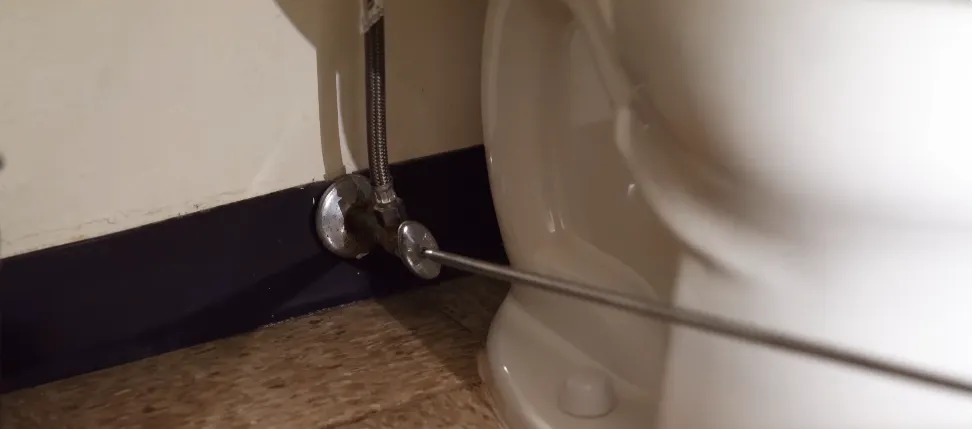
The angle stop on the wall and the supply hose to the tank are under constant pressure. Corroded valve stems, worn packing nuts and old hoses can drip slowly onto the floor behind the toilet, where nobody looks. Hard, mineral-rich water in the Plant City area builds crust on these fittings over time. See fixture and valve leak detection for more on angle stops.
Signs of a Toilet Leak
- The tank refills on its own between flushes
- Constant faint trickling sound
- Dye shows up in the bowl
- Water on the floor around or behind the toilet
- Higher water usage with no other explanation
- The handle has to be jiggled to stop running
Fixes and Next Steps
Flappers and fill valves are inexpensive parts and quick to replace. A failed wax ring means lifting the toilet and resetting it on a new seal, and checking the flange. A dripping angle stop is replaced. If water has soaked the subfloor or ceiling below, the area should dry before it's closed up. Call (813) 303-9621 for a free quote through our 24/7 leak detection in Plant City line.
Warning: Don't ignore a rocking toilet. Each flush can push water past a damaged wax ring into the floor, even if you don't see a puddle.
Toilet & Silent Leak Detection FAQs
Can a leaking toilet raise my water bill?
Yes. A running toilet is one of the most common causes of a jump in water usage, because water flows into the bowl around the clock.
How do I know if my toilet is leaking silently?
Do the dye test: add food coloring to the tank and wait 15–20 minutes without flushing. Color in the bowl means a silent leak.
Why does my toilet refill by itself?
Water is leaking from the tank into the bowl, usually through a worn flapper, so the fill valve tops it up.
Why is there water around the base of my toilet?
Most often a failed wax ring or a loose toilet, though condensation on the tank in humid weather or a supply leak can look similar.
How do I get a quote for toilet leak detection?
Call (813) 303-9621 and describe what the toilet is doing. A local provider can give you a free quote.