A pool dye test uses a squeeze bottle or syringe of leak-detection dye released slowly next to a suspected leak point, such as a crack, the skimmer throat, a light niche or a return fitting. With the pump off and the water still, the dye drifts toward any opening where water is escaping. If the dye gets pulled into a gap, you've likely found a leak.
- Confirm the leak first with a bucket test.
- Turn off the pump and wait for the water to be completely still.
- Release dye slowly and close to the surface you're testing.
- Dye finds leaks at fittings and cracks; it can't find leaks in buried plumbing.
Before You Start
Run a bucket test first to confirm the pool is actually leaking. Then note where the water level stops if you let it drop, since that height narrows where to dye test. You'll need a pool dye testing kit or a squeeze bottle of leak-detection dye from a pool supply store, goggles and a mask or snorkel if you're testing below the waterline, and a calm, sunny day.
Step by Step
- Turn off the pump, heater and any water features, and wait 15 to 30 minutes for the water to stop moving.
- Start at the most likely spots: the skimmer throat, the area where the tile line meets the shell, return fittings, the light niche, steps and any visible cracks.
- Get close and move slowly. Your movement creates currents that can carry dye on their own.
- Squeeze a small amount of dye right next to the surface, a few inches away.
- Watch where it goes. If the dye just drifts and spreads, there's no leak there. If it's pulled straight into a crack or gap, water is escaping at that spot.
- Repeat along the full length of cracks and around the whole perimeter of fittings.
The Most Common Leak Points to Test
Skimmer: where the plastic skimmer meets the concrete shell is a classic leak point, as the two materials move differently. See pool skimmer leaks.
Light niche: the conduit behind the light can leak water into the ground. Dye near the back of the niche, around the cord entry.
Returns and drains: around the fittings where they meet the plaster.
Tile line and coping: cracks or gaps along the waterline.
Shell cracks: structural cracks in the floor or walls. See pool shell cracks.
Safety Notes
Important: Always turn off the pump before testing near the main drain or suction fittings. Never dive alone, and don't test a pool light without turning off its power at the breaker.
If testing deep areas requires extended time underwater, leave it to a professional with the right equipment.
What Dye Testing Can't Do
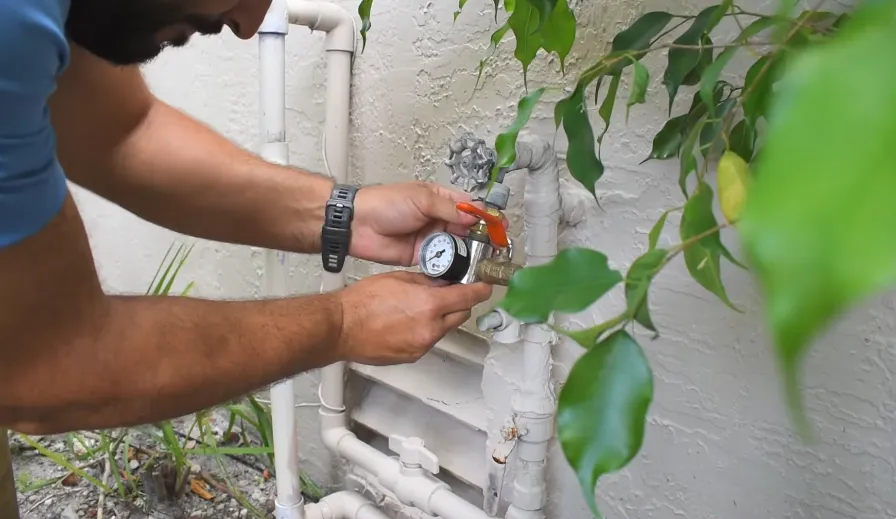
Dye only shows leaks at surfaces you can reach in the pool. Many pool leaks are in the buried plumbing between the pool and the equipment pad: suction lines, return lines and the main drain line. Those require pressure testing each line and listening for the leak underground. If your dye test finds nothing but the bucket test shows a loss, the plumbing is the next suspect. Professional pool leak detection combines dye work, line pressure tests and underwater listening equipment.
Frequently Asked Questions
Can I use food coloring for a pool dye test?
Pool leak-detection dye is made to be dense and visible underwater. Food coloring can work in a pinch, but it disperses quickly and is harder to read.
Will dye stain my pool?
Leak-detection dye is used in small amounts and dissipates. Use only what you need near each spot.
Does the pump need to be off?
Yes. Any water movement from the pump or jets carries the dye and makes results meaningless.
Can a dye test find leaks in underground pipes?
No. Buried plumbing leaks require pressure testing and acoustic listening.
The dye was pulled into the skimmer joint. What now?
That's a likely leak. Call a provider to confirm and repair it, and check for other leaks at the same time.